The Defensive Illusion: Five UK ‘Safe’ Stocks Losing Their Shield — and Three Dull Cash Machines Worth a Look

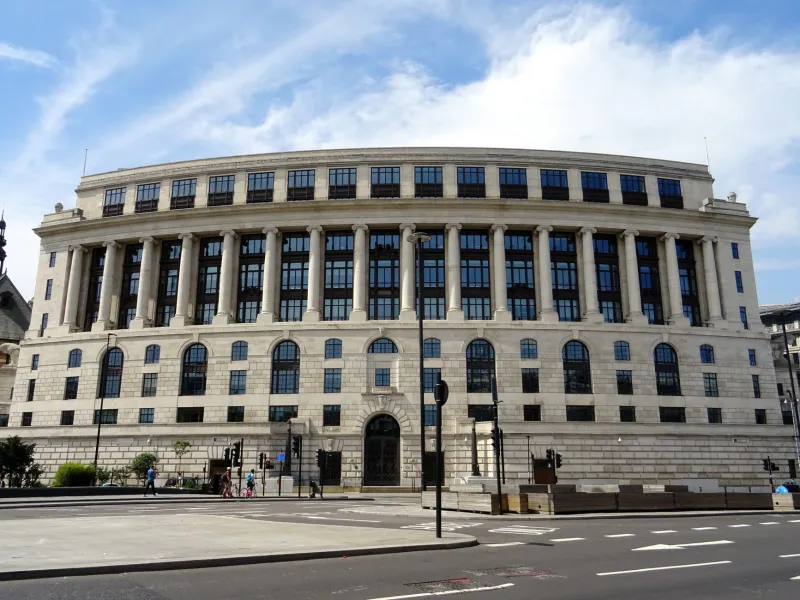
Photo: forextime.com, CC BY 2.0, via Wikimedia Commons
Every UK investor knows the drill. When macro gets ugly, hide in utilities, consumer staples and the sort of companies that sell things people buy in a downturn. It is the investing equivalent of a bowl of porridge: bland, dependable and unlikely to surprise you.
Except in 2026, porridge is getting expensive. Defensive is not a sector label. It is a cash-flow characteristic. And some of the most popular ‘safe’ names on the UK market are starting to look less like shields and more like bond proxies with equity risk attached.
The comfort blanket trade
The logic is simple enough. People still need electricity, water, toothpaste and groceries. So utilities and staples should hold up when the economy slows. That worked for years, especially when interest rates were low and investors were desperate for dependable dividends.
But 2026 is not a low-rate world. Borrowing costs are elevated, inflation is sticky and the UK consumer is finely balanced. A company can have defensive revenues and still be a poor investment if it is carrying too much debt, facing regulatory pressure or trading on a valuation that assumes nothing goes wrong. Safety is a price-sensitive idea.
Five ‘safe’ names with exposed flanks
These are not short calls. They are examples of how the defensive label can hide duration, regulation and balance-sheet risk.
1. National Grid. The textbook UK defensive. Regulated revenues, essential infrastructure, dependable dividend. But the network build-out is capital-hungry, and higher bond yields make that capex more expensive. A utility is not a savings account. When the cost of capital rises, the ‘safe’ multiple can compress.
2. Severn Trent. Water companies have long been treated as bond proxies. But the sector’s social licence is under pressure, regulators are demanding more investment and the political temperature around sewage and dividend policy is not cooling. Defensive revenues do not erase reputational and regulatory risk.
3. Unilever. A staples giant with genuinely global brands. Yet defensive does not mean fast-growing. Volume growth has been hard to come by, consumers are downtrading, and the portfolio has been through plenty of churn. It can be a steady business without being a bargain at any price.
4. British American Tobacco. The cash cow of the UK market. Tobacco revenues are famously inelastic, but declining volumes, regulatory risk, FX and debt are real. Investors have been paid to wait, but a high dividend yield can be a warning sign as much as a comfort. It is not a bond.
5. Tesco. Groceries are about as defensive as it gets. But UK grocery margins are thin, wage costs are rising and the discounters are still hungry. Tesco is a strong operator, but ‘recession-proof’ is a stretch when the consumer is watching every penny and the competition is relentless.
Why boring wins
Boring is not the same as defensive. Boring can mean recurring revenue, sticky contracts and cash conversion that does not depend on the economic cycle being kind. Those qualities are less exciting in a bull market, which is precisely why they can be less crowded and more reasonably priced.
Three dull cash machines
B2B distribution. Think Bunzl-style businesses: companies that sell the unglamorous consumables other businesses need — packaging, cleaning products, safety kit. The margins are not sexy, but the contracts are sticky and inflation can often be passed through. The risk is acquisition-led growth and FX, but the cash generation is real.
Self-storage. Big Yellow and Safestore are not going to excite anyone at a dinner party. But monthly rolling contracts, pricing power and asset backing make self-storage a quietly cash-generative sector. It is sensitive to rates and property values, so it is not risk-free — but it is a different kind of defensive.
Specialist insurance. Beazley and Lancashire-style underwriters are not consumer staples. They are cyclical, and catastrophe losses can bite. But when the market is hard, underwriting discipline generates serious cash. It is boring, technical and unloved — three things contrarian investors should at least look at.
The contrarian takeaway
The crowd is still hiding in the same UK defensives. That does not make them bad companies. It makes them crowded assumptions. In 2026, the better question is not ‘is this sector defensive?’ but ‘is this business generating cash, pricing for inflation and trading at a sensible valuation?’
Defensive labels can be useful shortcuts. They can also be value traps in disguise. The contrarian move is to stop buying the label and start buying the cash flow — preferably before everyone else notices.
None of this is personal advice. Names are for illustration only; do your own research.